PlayTogether
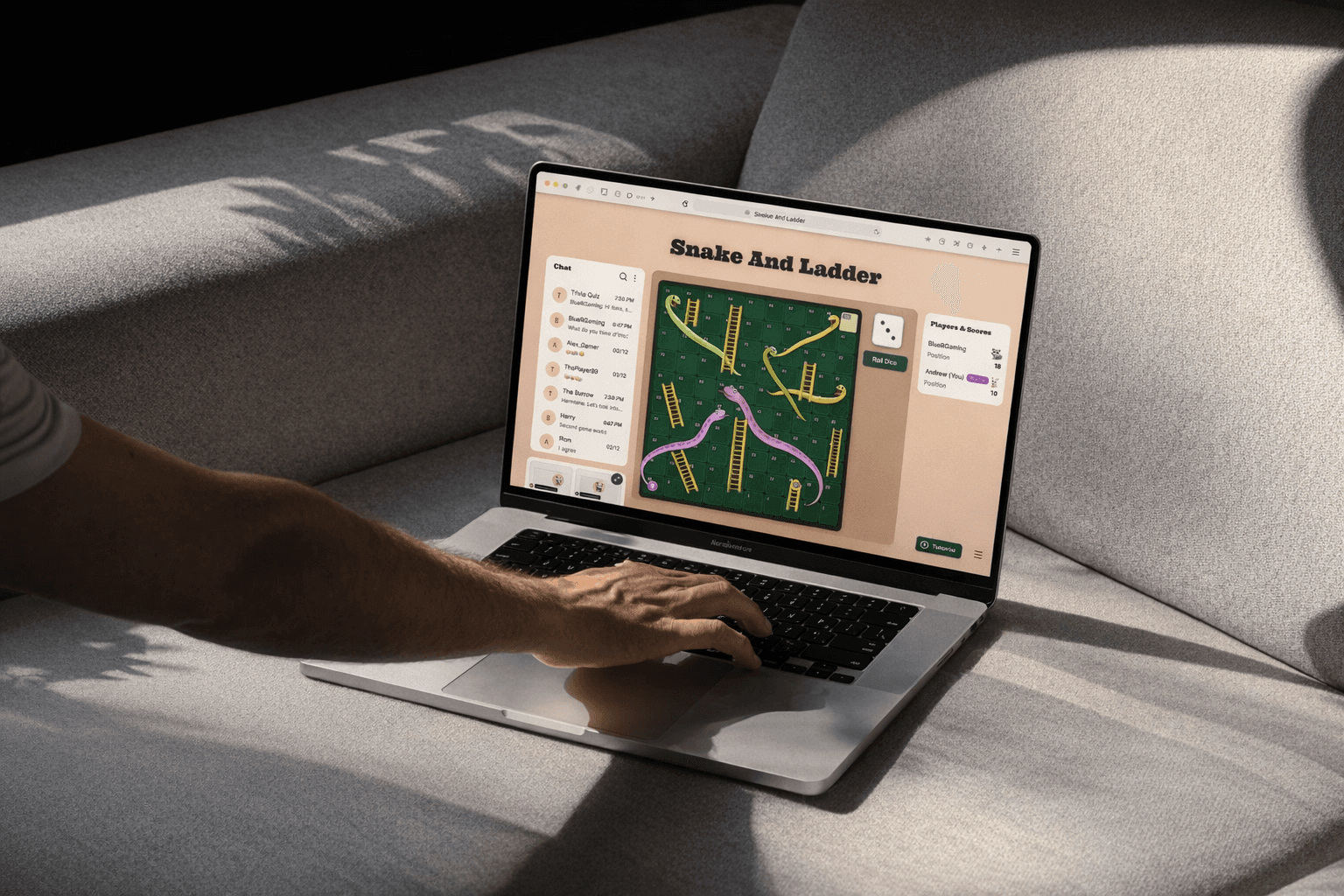
A research-to-prototype design project reimagining how dispersed friend groups experience game nights online where connection comes first and the game is just the medium.
Title
Industry
Date
Approach
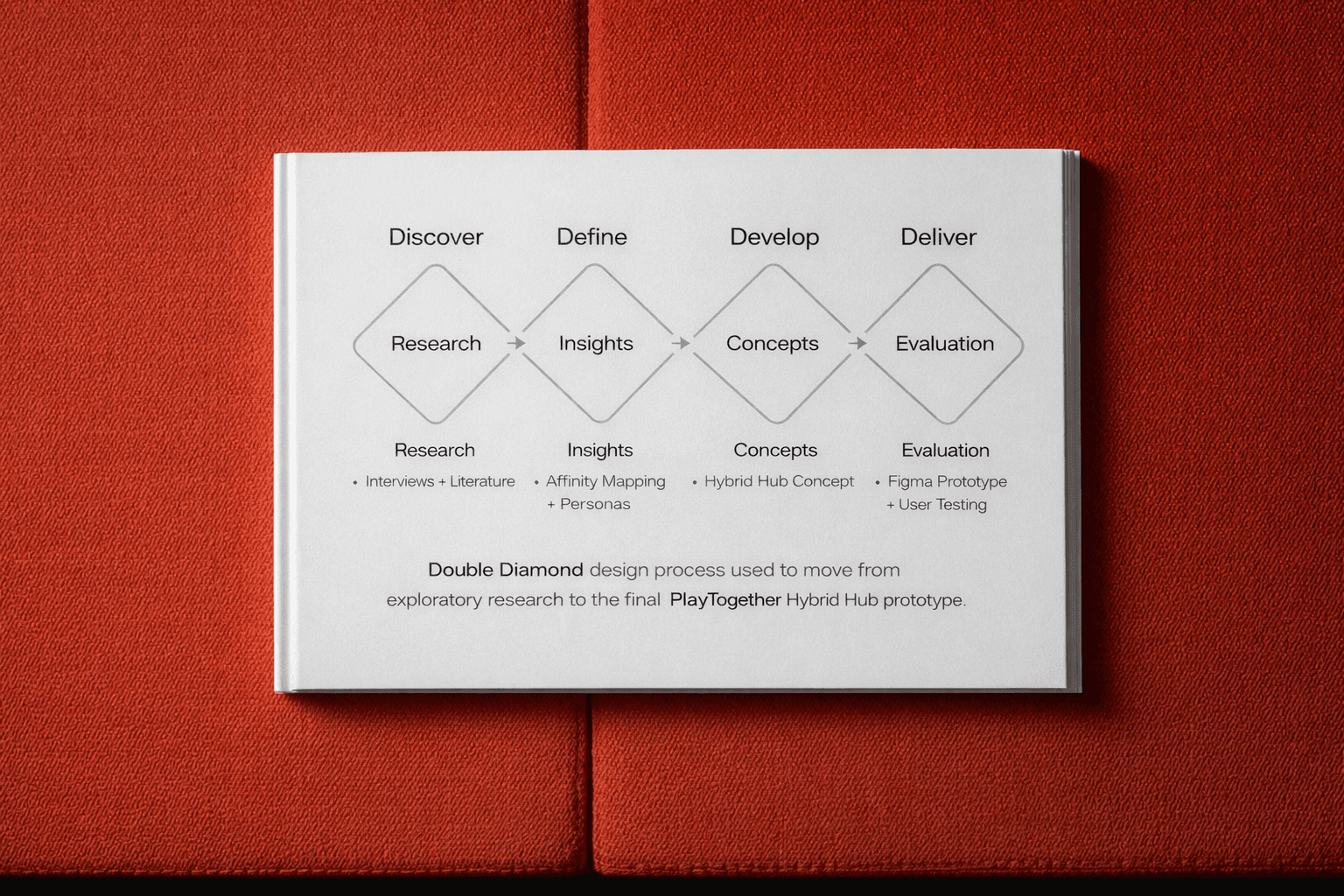
The project followed a full end-to-end interaction design process. It began with 7 semi-structured interviews with young adults (18–30) to surface the emotional and practical gaps in remote play, supplemented by CSCW literature on shared space, tangibility, and social well-being. Insights were synthesized through affinity mapping (110+ data points), two personas (Sarah and Daniel), and a journey map that pinpointed exactly where the social energy breaks down.
From this foundation, the team generated 60+ ideas, clustered them into themes, and developed two contrasting system concepts a Communication-First Hub and a Social Virtual Game Table. Rather than choosing one, the final design merged both into the PlayTogether Hybrid Hub: a single browser-based platform where one click drops you into a persistent room with integrated video, spatial audio, a shared virtual table, team huddles, scheduling tools, and onboarding bots.
The design was then built as a mid-fidelity Figma prototype, evaluated through an internal walkthrough with role-played personas, refined through paper prototypes targeting socially complex flows (huddles, drop-in/out, post-game afterglow), and finally assessed through a mixed-method evaluation combining think-aloud sessions with real users and task-based expert review by four HCI specialists.
Challenge
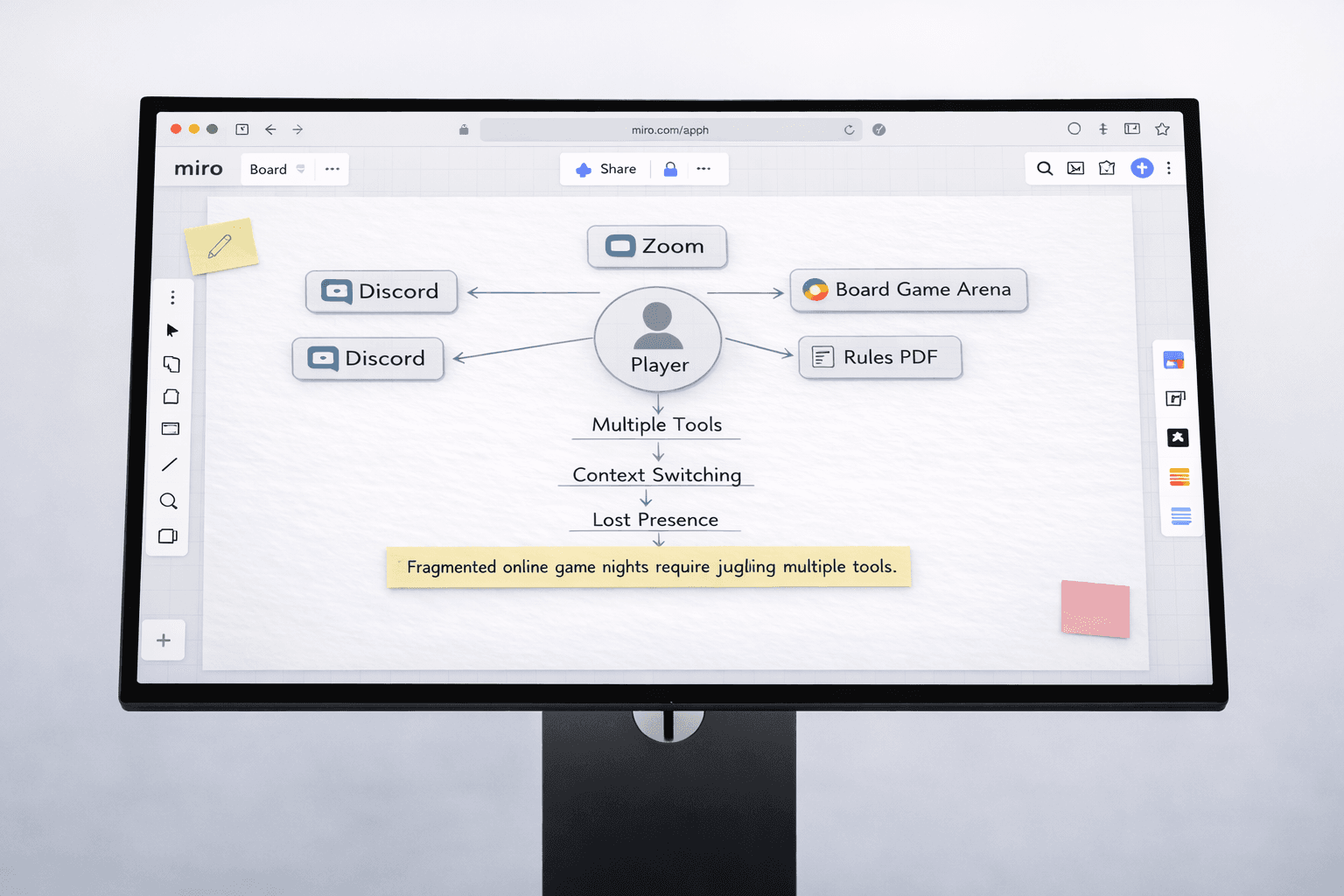
Remote work and migration have quietly eroded one of the most human rituals: the weekly game night. Existing tools like Discord, Tabletop Simulator, and Board Game Arena force players to juggle multiple apps, deal with high setup friction, and play without the warmth of being physically together. The result is sessions that feel mechanical more like solving a puzzle than hanging out. The real problem isn't missing games. It's missing presence.
Projects
Explore more like this one

Selected projects that reflect my approach to design, development, and execution.